Fougito
info@fougito.com
Office No. 606, City Avenue, Port Saeed, Dubai, United Arab Emirates
Dubai, Dubai,
50819
United Arab Emirates
Food & Beverages
31 Oct 2026
Admin
The way businesses operate today looks completely different from just a few years ago. Customers expect faster service, seamless payments, personalised experiences, and convenience at every step. Whether it's a restaurant, café, retail store, or food truck, technology has become the driving force behind smoother operations and happier customers.
This shift has made the smart POS system one of the most important tools in the F&B industry. What was once a simple machine used for processing payments has evolved into a complete business management solution. Modern POS technology now helps businesses manage inventory, monitor sales, track customer behavior, oversee staff performance, and much more…all from a single platform.
As customer expectations continue to rise in 2026, businesses are moving away from outdated systems and embracing cloud-based intelligent solutions that offer greater flexibility, automation, and control. Let's delve into the definition of POS, its functionality, its historical evolution, and why it is crucial for any business aiming to thrive in today's dynamic environment.
POS stands for Point of Sale. Simply put, it is the place where a customer completes a purchase and makes a payment. However, modern POS technology is about much more than processing transactions.
The latest point of sale (POS) systems are designed to integrate software and hardware, enabling businesses to run more efficiently. The POS system is the main element of a business, as of taking orders and processing payments, monitoring inventory and making reports.
So when someone asks “What is a POS system in 2026?” the answer is so much more expansive than it was a few years back. Today, POS systems are intelligent business tools that were created to streamline business operations, decrease manpower and enhance the customer experience.
Rather than dealing with several separate and isolated systems, enterprises can now handle it all from a single dashboard. This holistic solution not only streamlines the process but also minimizes inaccuracies and offers insights that can assist owners in making informed choices.
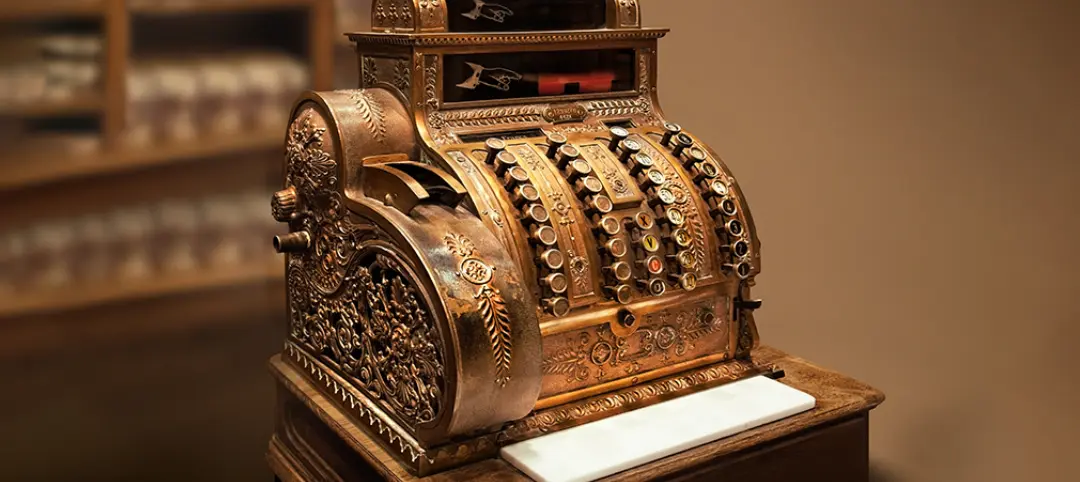
The history of POS is a captivating tale of innovation and adaptation. The need for businesses to manage their transactions and maintain their operations in an organised manner has always been there. It began as a cash register and has slowly evolved into a digital environment.
Over the years, the needs of the F&B industry have become more complex. Businesses no longer need a system that only records sales. They need solutions that help them manage customers, inventory, deliveries, employees, and analytics in real time.
This demand has driven the shift from basic hardware setups to advanced cloud-based intelligent solutions that support business growth while improving operational efficiency.
Today, many restaurants and retailers rely on POS systems not just to process payments but to run their entire business from a single platform.
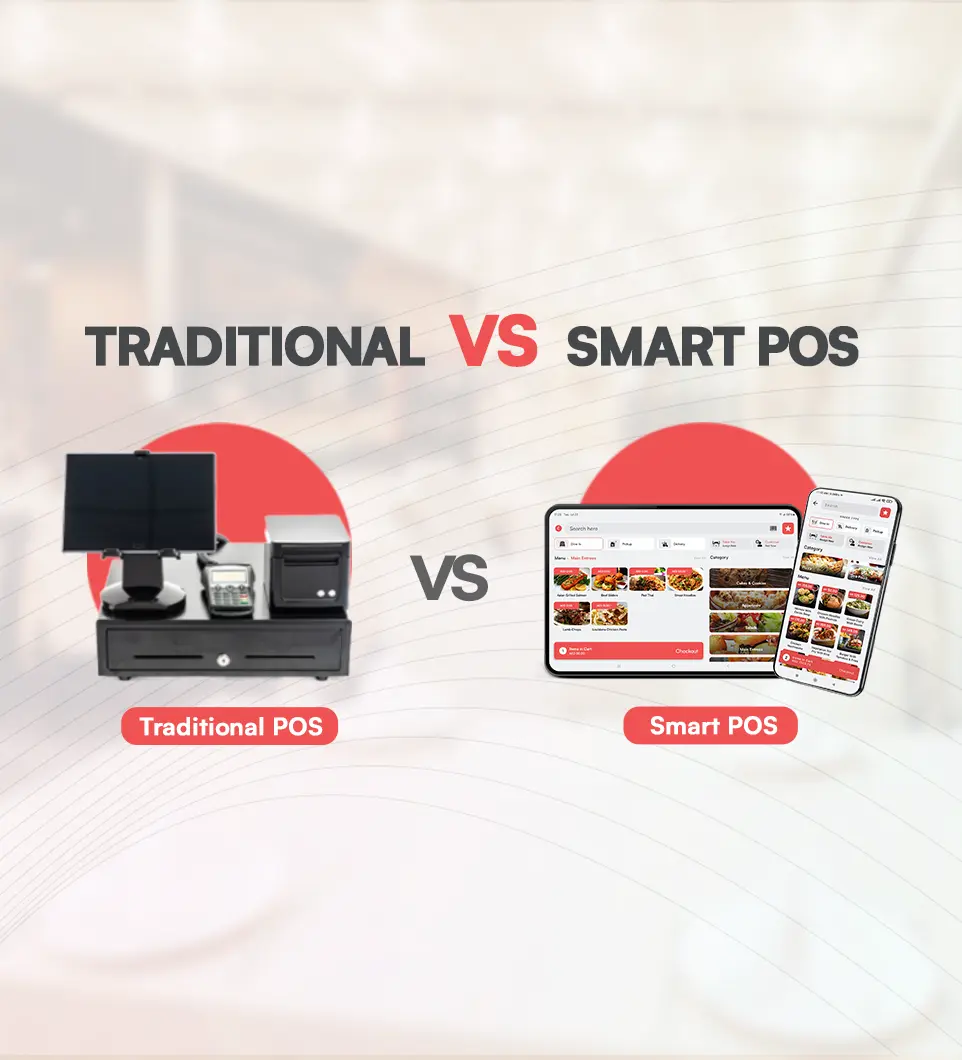
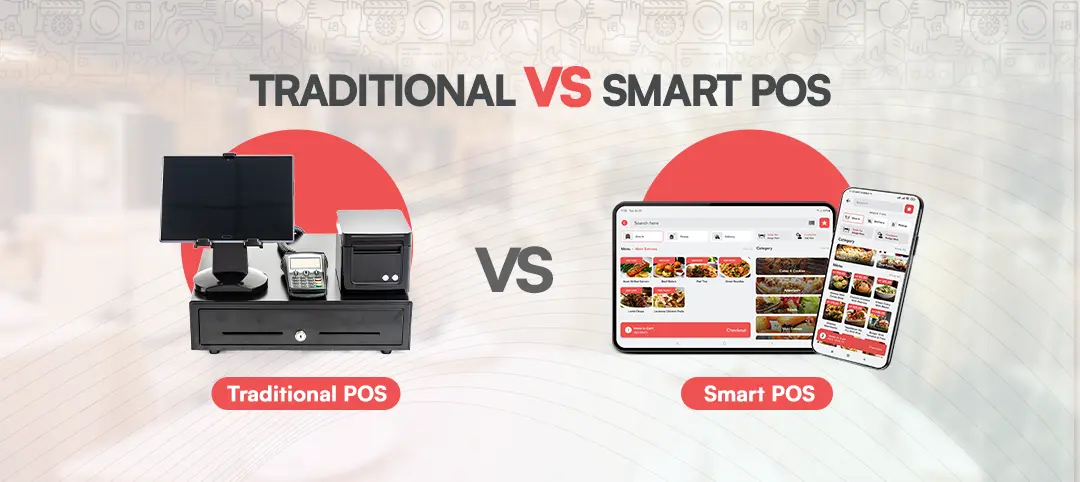
Traditional POS system was used by businesses for many years. Generally these configurations consisted of cash registers, desktop computers, a barcode scanner, a receipt printer, and software installed locally. They were effective but were often complicated, costly and had to be manually maintained and updated.
One of the difficulties of a traditional POS system is that it is inflexible. Data is typically stored locally and is not easily accessible from remote locations. When hardware breaks down, businesses can experience downtime which can impact their operations and customer service.
Space is another concern, especially for smaller restaurants and cafés. Bulky equipment can take up valuable counter space while increasing setup and maintenance costs.
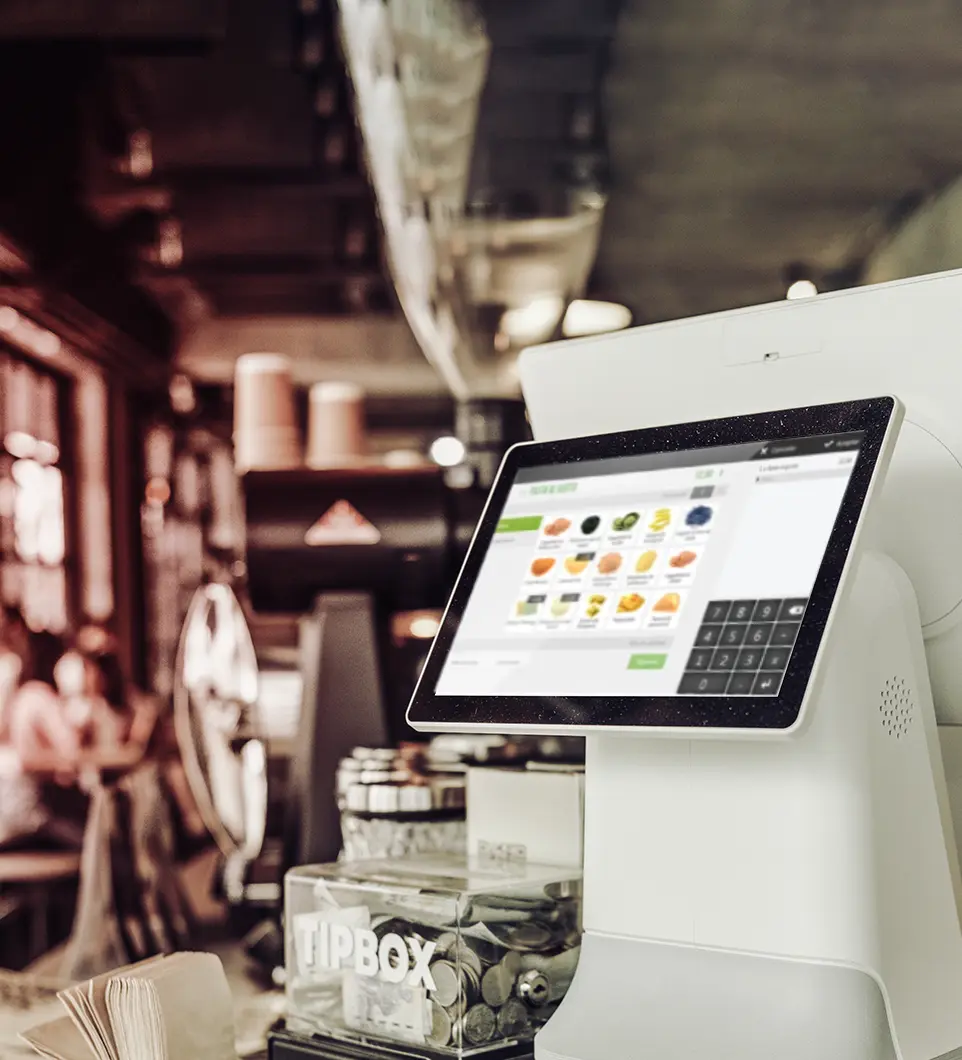
In contrast, smart POS systems are designed for the modern business environment. They use cloud technology to provide faster, more flexible, and highly efficient solutions.
Instead of relying on expensive infrastructure, businesses can access their POS system through tablets, smartphones, or other connected devices. This makes operations more mobile and significantly reduces hardware costs.
The biggest advantage of smart POS systems is accessibility. Business owners can monitor sales, check inventory, review reports, and manage operations from virtually anywhere.
Modern POS platforms are powered by cloud-based intelligent solutions, allowing businesses to access real-time information whenever they need it.
Updates happen automatically without manual installations. Security measures are constantly improved. Data backups occur in the background, reducing the risk of losing important business information.
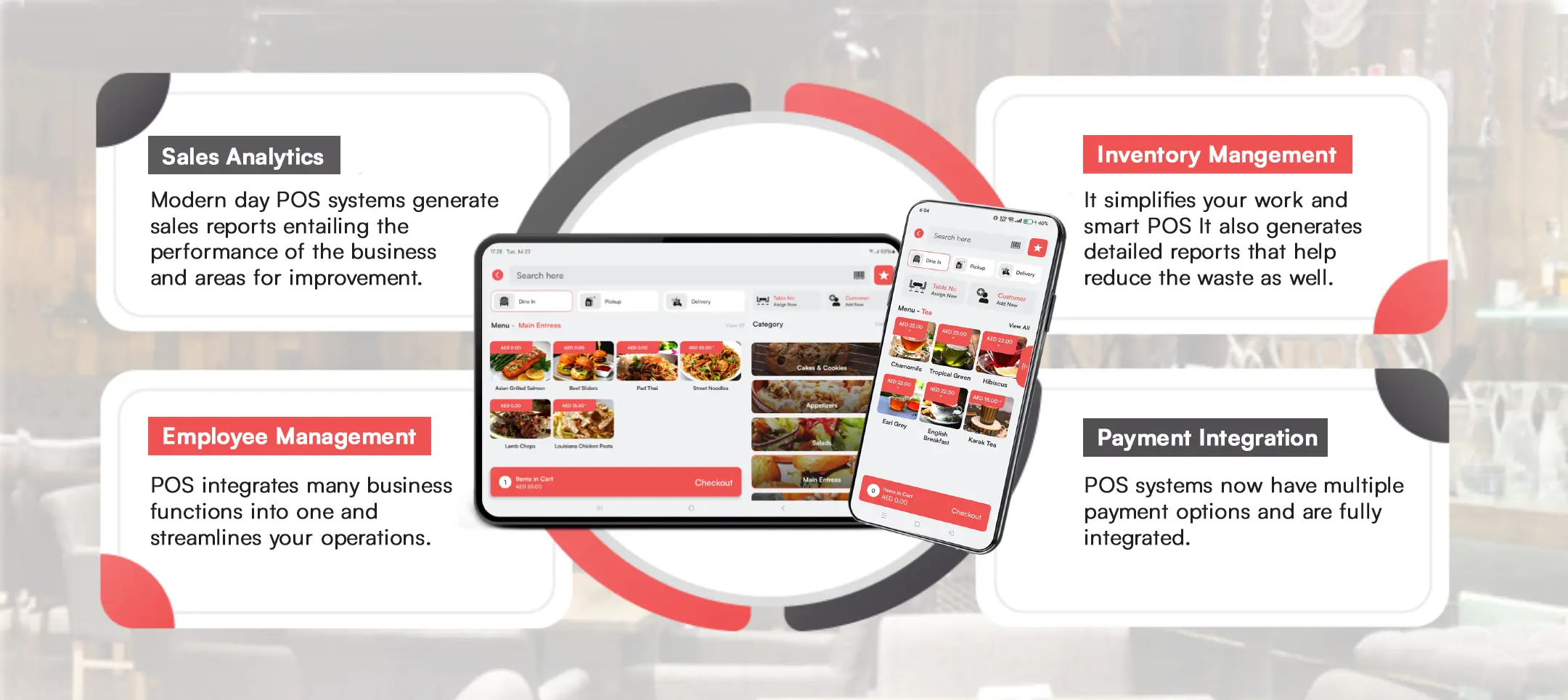
A modern smart POS system often includes:
This level of functionality has transformed the POS system from a payment processor into a complete business management tool.
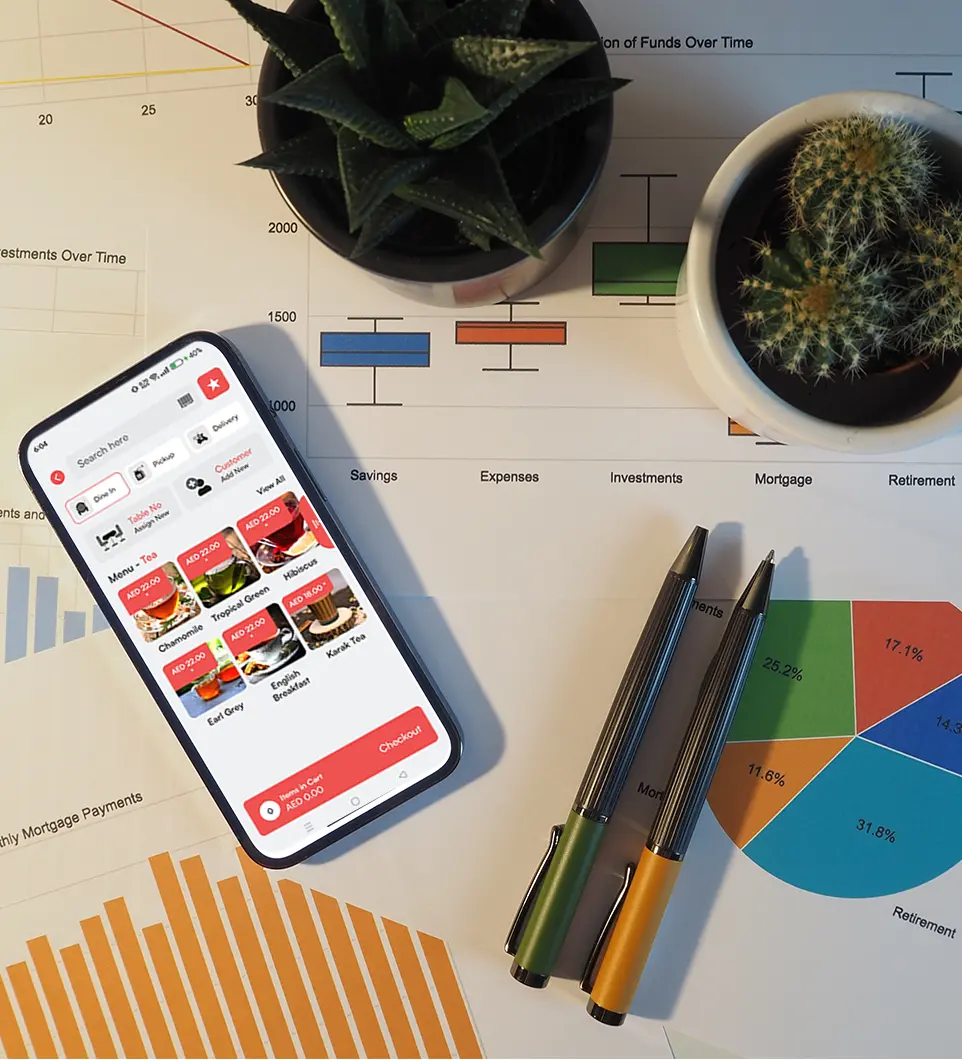
Overall, the global POS industry is poised to continue growing at a robust pace, driven by the adoption of digitalisation in businesses. Whether you're in a restaurant, retail or hospitality business, owners are putting money into technology that makes their operation efficient and addresses the evolving dynamics of customers.
In markets such as the UAE, POS adoption is accelerating due to increased demand for automation, data-driven decision-making, and personalized customer experiences.
The growth of the global POS industry is no longer driven solely by payment processing. Businesses are now looking for solutions that can improve productivity, reduce operational costs, and create better customer journeys.
Several trends are shaping this growth in 2026.
Customers today expect fast and convenient payment options. Waiting in long queues or dealing with slow payment processes can negatively impact the overall experience.
Modern POS platforms support multiple payment methods.
This flexibility allows businesses to accommodate different customer preferences while improving checkout speed.
As smart POS technology continues to evolve, payment experiences are becoming faster, safer, and more convenient than ever before.
It's no longer just about the desktop computer and stationary terminals. These days, businesses need to use smartphones, tablets, self-service kiosks and handheld devices to conduct everyday business.
This shift has made smart POS systems increasingly popular because they can seamlessly integrate with modern devices and business tools.
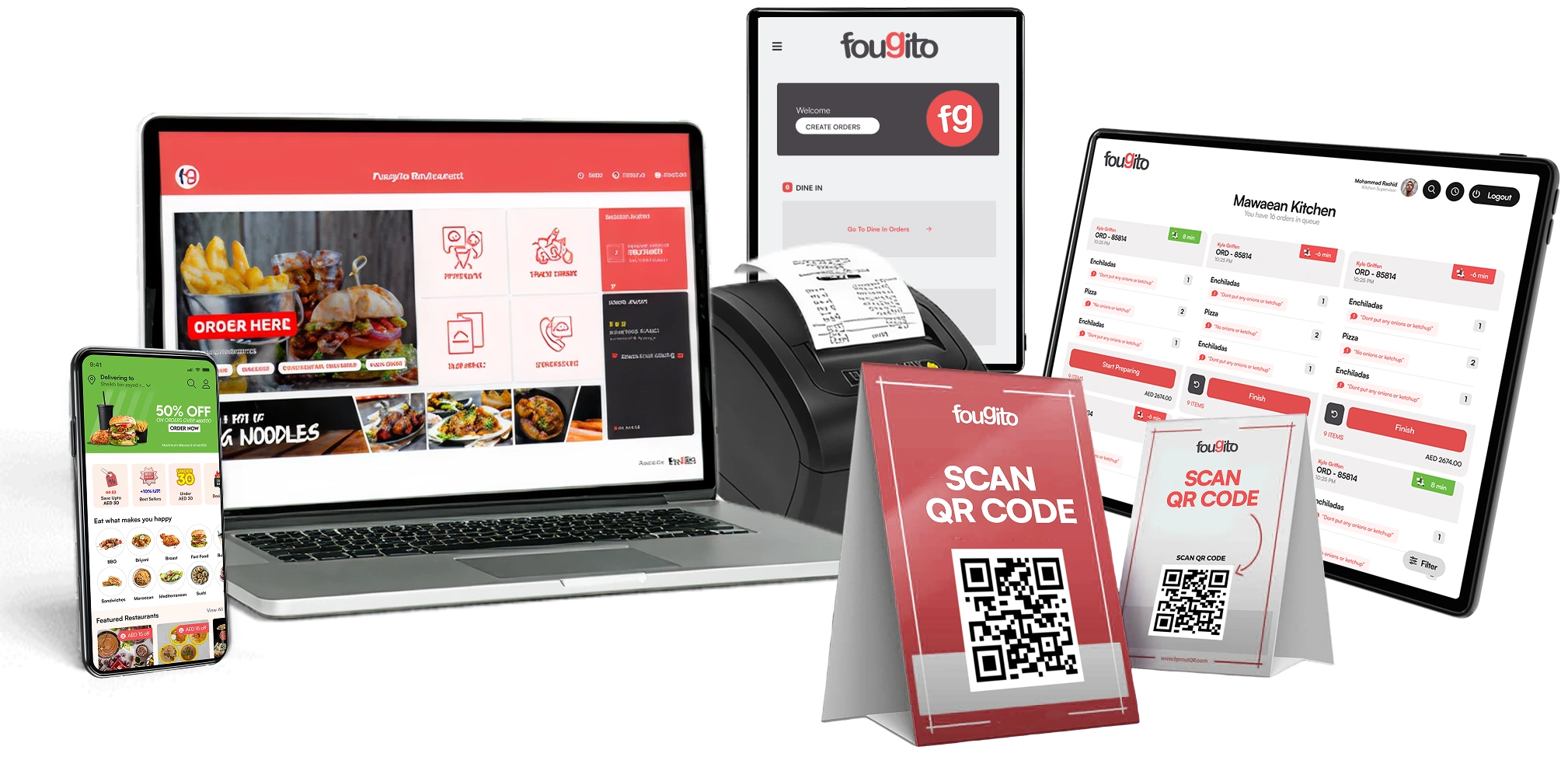
Restaurant managers can monitor performance from their phones. Staff can process orders using tablets. Customers can browse digital menus and place orders through QR codes.
This flexibility not only improves efficiency but also helps businesses adapt to changing customer expectations more quickly.
With the competitive market today, great food or product is not the only thing that works. People recall experiences and Positive experiences in a business can be a great way for them to stand out.
Customers desire convenience, speed and control. Companies that provide such experiences will have a higher likelihood of fostering loyalty and repeat customers.
The relationship among technology and customer satisfaction has grown stronger as we continue well into 2026. Today's businesses are investing in smarter systems tomorrow.
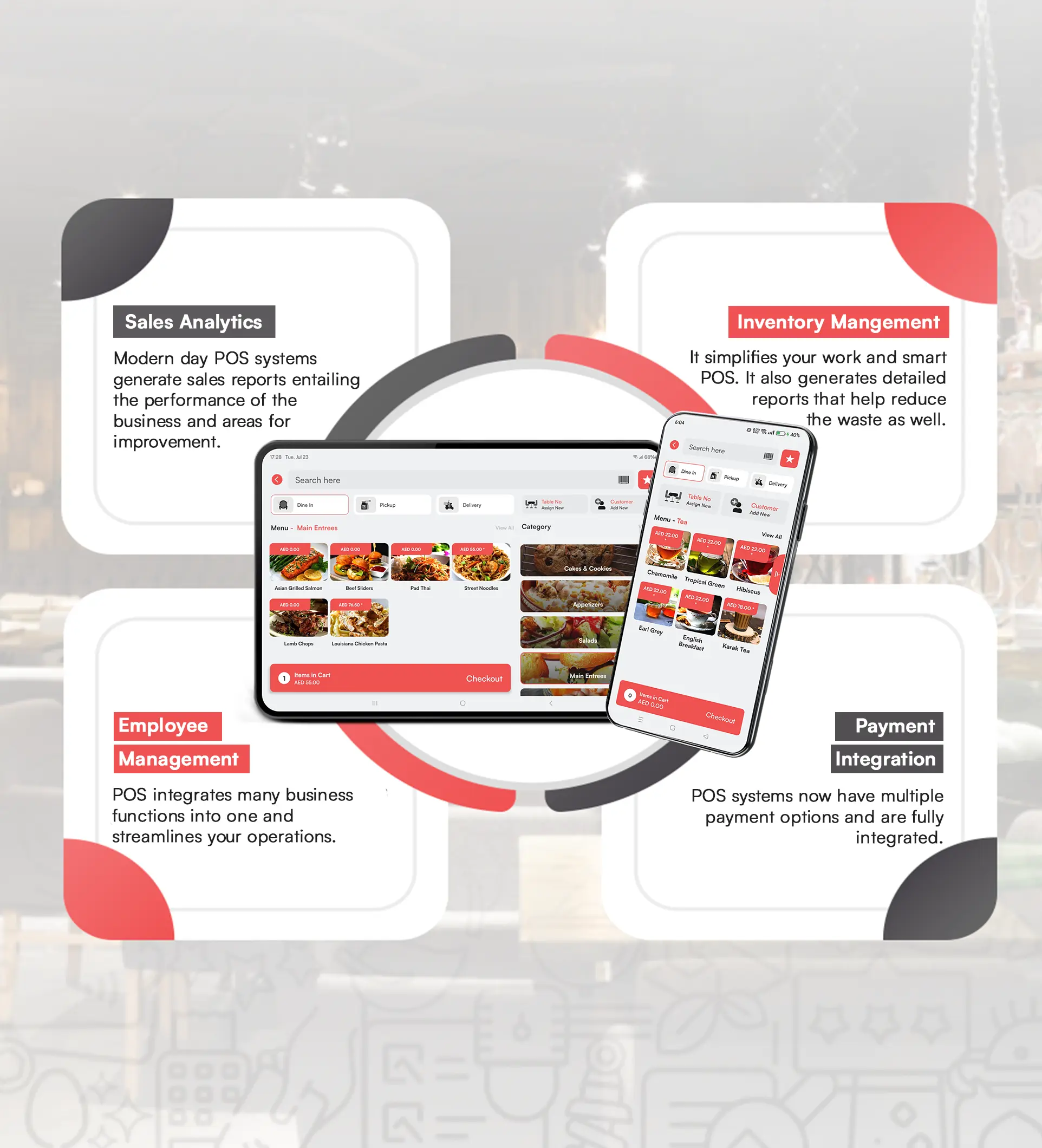
From a busy restaurant to a growing café or retail store, it's no longer practical to operate day-to-day without some support. In today's business, hundreds of transactions, inventory movements, customers and staff activities are performed each day. This is where a modern point-of-sale system comes in handy.
An F&B POS system is far more than a billing machine in today's F&B industry. It serves as a business hub to track operations, boost efficiency, and make better decisions. Modern platforms like Fougito are designed to integrate various business functions, enabling business owners to manage these functions from a single central location, while providing their customers with a better experience.
One of the most useful aspect of one of the top-notch POS (Point of Sale) solutions is inventory management. Businesses no longer need to count stock and track ingredients using spreadsheets; now they can do it in real time.
In today's smart POS system, the inventory is automatically updated when the sale is made. The restaurant owners can immediately get an idea of which ingredients they are running low on, which items are being wasted and avoid unnecessary over-ordering. This not only saves money but also helps improve kitchen efficiency.
A modern POS system can accept cash, debit, credit cards, mobile wallets, QR payments and contactless payments. This flexibility enables businesses to provide quicker service to their customers, without causing queues or any checkout hassle.
The UAE has experienced rapid growth in the adoption of digital payments, which has further fuelled the demand for payment solutions that are integrated. Customers want convenience; businesses that provide a convenient and secure payment experience can typically do better to increase customer satisfaction and keep customers coming back.
Valuable data is generated with every transaction. Modern systems do not just leave this information unused; they also turn it into easily digestible reports. With this data, restaurant owners can easily discover their most popular menu items, most busy times of the day, their top bus drivers and their most profitable menu categories.
Data insights enable businesses to be more agile in adapting to market trends and client needs. Precision data could mean the difference between responding to issues and averting them in an era of a highly competitive F&B business.
Today's point-of-sale systems can be configured to give varying levels of access to employees based on their job responsibilities. There is no need to manually check transactions, attendance, sales performance or detect operational bottlenecks as these can be monitored by managers.
Employee management features are gaining prominence as more restaurants begin to take a digital approach to their workflows in 2026.
Today's POS systems integrate directly with delivery operations, allowing businesses to manage dine-in, takeaway, click-and-collect, and delivery orders from a single dashboard. This eliminates confusion and ensures every order reaches the correct customer quickly.
As consumer expectations continue to rise, integrated delivery management has become one of the most important capabilities offered by modern cloud-based intelligent solutions.
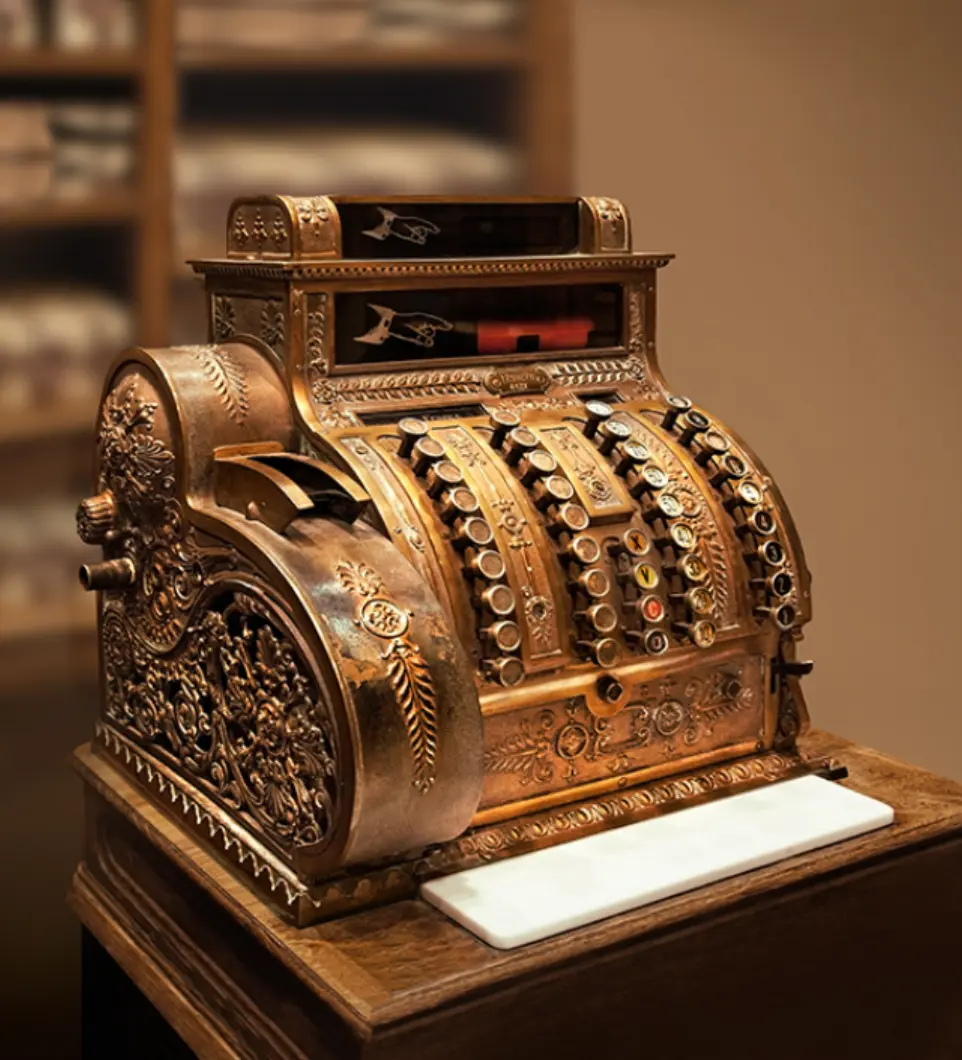
The history of POS technology dates back much further than many people realise.
The very first point-of-sale system was introduced in 1879 by James Ritty, an Ohio-based business owner who wanted a better way to track transactions and reduce employee theft. His invention, known as the 'Incorruptible Cashier,' became the foundation for modern cash registers.
At the time, the goal was simple: accurately record sales and improve accountability. Nobody could have predicted how dramatically POS technology would evolve over the next century.
For many decades, businesses relied on mechanical cash registers and paper records to manage sales.
While these systems helped improve transaction tracking, they offered very limited functionality. Business owners still needed to manually manage inventory, monitor staff performance, and calculate reports. Human error was common, and retrieving business data often required hours of manual work.
The limitations of these early systems eventually created demand for more advanced solutions.
The late twentieth century marked a major turning point in POS technology.
Electronic cash registers and card payment systems began replacing manual processes. Businesses could process transactions faster, improve record keeping, and reduce operational errors.
This period laid the groundwork for what would eventually become today's smart POS technology. As internet connectivity improved and cloud computing emerged, businesses gained access to more powerful and flexible tools than ever before.
When comparing a traditional POS system with today's cloud-powered solutions, the differences are significant.
Older systems relied heavily on local servers, fixed terminals, and expensive hardware. Updates often required technical support, and accessing business information remotely was difficult or impossible.
With today's smart POS systems, however, the focus is flexibility and accessibility. By essentially leveraging cloud infrastructure, business owners can monitor sales, manage inventory and track performance from just about anywhere.
The journey of POS technology is fascinating and reflects the adaptation of businesses to the changing needs of their customers and the challenges they face. From its humble beginnings as a cash register, it has evolved into a robust business management solution that manages everything from inventory to payments, analytics to customer engagement.
As the global POS industry continues to expand, companies are shedding their legacy systems and adopting cloud-based intelligent solutions. Investing in a modern Point of Sale (POS) system isn't just about transactions for restaurants and retailers in the UAE. It's the idea of being more efficient, delivering better customer experiences and generating a better platform for growth.